‘It is important that patients are involved in the NGID consortium’
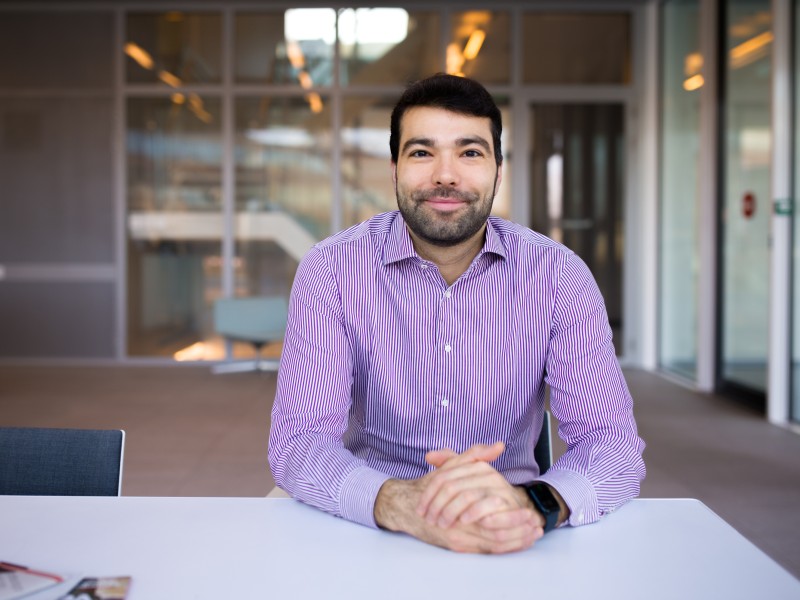
Jim van der Zon, together with other patient representatives, regularly sits at the table with researchers and staff of the Next Generation ImmunoDermatology (NGID) Consortium.
'We are having this conversation at CHDR now. Do you come here more often?'
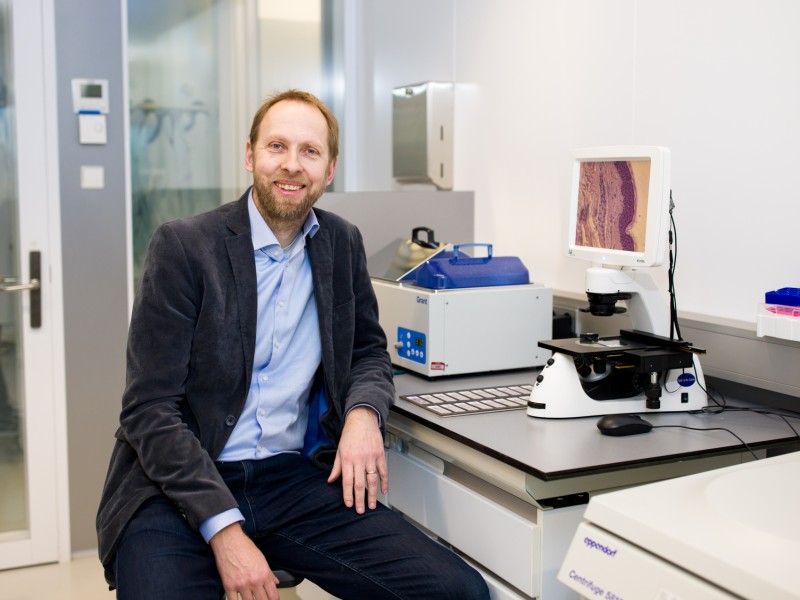
Definitely! I live nearby and like to come here for consultations with CHDR’s Research Director Dermatology, Robert Rissmann and with Hanna Niehues, NGID’s liaison for patient organisations. I think it is extraordinary what Robert and his many collaborators within NGID have achieved already, and I am glad they are so open to input from patient organisations.
‘Which organisation do you represent?
'I represent PN (Psoriasispatienten Nederland), an organisation for all patients with psoriasis in the Netherlands. We have a foundation that promotes scientific research on psoriasis, where I also sit on the board. In some of NGID’s meetings about the content of research, you can say I represent this foundation.
What drives you to meet with NGID’s liaison and researchers?
I think it is important that researchers have a clear picture of the people who are ultimately the focus of their efforts; in other words, that we as patients are visible and have a voice in the consortium. The large cohort study starting in 2025 could provide hugely valuable information for patients with psoriasis and other conditions. It could also show the benefit of giving certain treatments earlier in the course of the disease. And it offers the opportunity to test other hypotheses about the origins of diseases such as psoriasis.
Are you also involved in the content of NGID’s studies?
Yes, in various ways. In the consultations with all patient organisations, the experience of patients is often at the forefront. I think it is really important to also focus on our experiences, on the psychological impact of skin diseases. Skin diseases are so visible, so for many patients, feelings like shame and anxiety come into play, which may even contribute to anxiety disorders or depression. Moreover, immunodermatological disorders, especially psoriasis, are not limited to the skin. Some patients primarily suffer from arthritis, with pain, fatigue, and other symptoms. It is good that attention is paid to the way we experience all those consequences. From my own interest in science, I also like to think about the biomedical aspects of NGID’s research. We usually schedule separate meetings to discuss those biomedical aspects.
What would you like to see researched in the field of psoriasis?
Scientists and patients in our foundation have a hypothesis about the origin of psoriasis that we would like to see investigated. Very broadly, we want to look for the underlying cause of the inflammatory responses in psoriasis. We have indications that abnormalities in metabolism, in the mitochondria, underlie the derailed immune response seen in psoriasis. One such clue is the efficacy of dimethyl fumarate in psoriasis. I know from experience that it can be effective, but its mechanism of action is still poorly understood. I hope that NGID will take us a step further in exploring this hypothesis. Either way, I think it is great that there is now so much attention to immunodermatology in the Netherlands. The collaboration between academic researchers and companies will certainly open new avenues for better diagnostics and treatment and thus for a better quality of life for patients.
Interested in learning more?
More articles from 2024 stories